Published Works
Books by Sinéad McCoole
Award-winning publications exploring Irish women's history, from revolutionary activists to forgotten voices of the past.
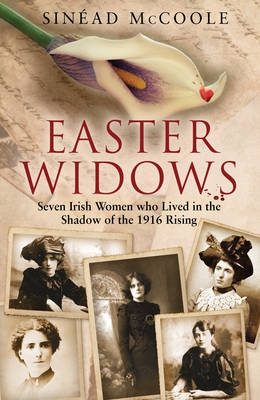
Easter Widows
Doubleday Ireland, 2014
About the Book
One week in May 1916, seven Irish women became widows. When they had married their husbands they had embarked on very different lives. They married men of the establishment; one married a lecturer, two others married soldiers, another a civil servant. These women all knew each other and their lives became intertwined.
For the seven women whose stories are told in Easter Widows, their husbands' interest in Irish culture, citizenship and rights became a fight for independence which at Easter 1916 took the form of military action against the British. These men were among the leaders who formed a provisional government of the Irish Republic and issued a proclamation of Irish Independence.
But the Rising was defeated, and the leaders were arrested and hastily executed. Some of the widows broke under the strain of their experiences and this story tells of miscarriage, illness and tragic early death. Yet for another of the women, the execution of her husband allowed her to return from self-imposed exile, freed from the fear that her son would be taken from her by her estranged husband.
This is also a story of women of power and success - some of the widows emerged from the shadows to become leaders themselves. It is a human story told against the backdrop of the years of conflict in Ireland 1916-1923 - the Rising, the War of Independence and the Civil War.
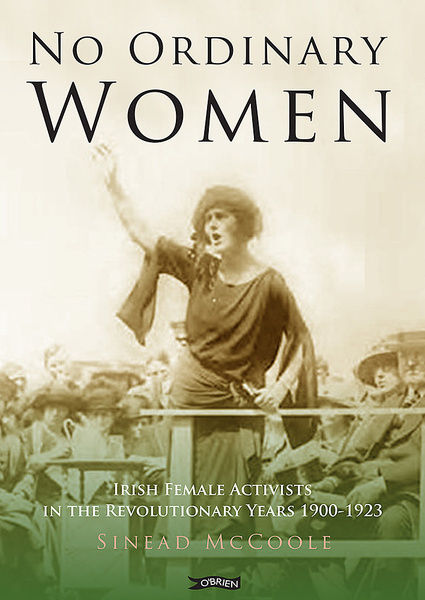
No Ordinary Women: Irish Female Activists in the Revolutionary Years 1900-1923
O'Brien Press, 2003 (Enlarged edition 2015)
About the Book
No Ordinary Women: Irish Female Activists in the Revolutionary Years 1900-1923 was published by the O'Brien Press, 2003. The book was reissued in 2008 with a new cover, and enlarged in 2015 with additional biographies and a new introduction.
This book provides an over-view of women's activities during Ireland's Revolutionary Years. Spies, snipers and gunrunners, medics, women played a major role in the fight for Ireland's freedom. This book highlights a time when vast numbers of Irish women were politicised and imprisoned for their beliefs 1916-1923, with a special emphasis on one prison, Kilmainham Gaol.
They came from every class in society and all walks of life: titled ladies and shop assistants, doctors, housewives, laundry workers, artists and teachers. Some were married with children, others widowed and some mere schoolchildren. These are hidden stories that vividly recreate the characters, personalities and courage of Ireland's revolutionary women. Contains 50 individual biographies.
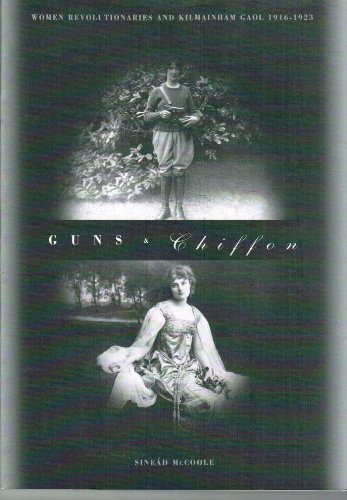
Guns and Chiffon: Women Revolutionaries and Kilmainham Gaol
Stationery Office, 1997
About the Book
This groundbreaking study examines the experiences of women political prisoners held in Kilmainham Gaol during Ireland's fight for independence. It reveals the stories of women who were imprisoned for their revolutionary activities, challenging traditional narratives that often marginalized women's roles in the independence movement.
The book explores the conditions these women endured, their resistance strategies, and their unwavering commitment to the cause of Irish freedom. It provides intimate details of daily life in the prison and the psychological toll of incarceration.
Through personal accounts, prison records, and historical documentation, this work brings to light the courage and determination of these revolutionary women, many of whom continued their political activism after their release.
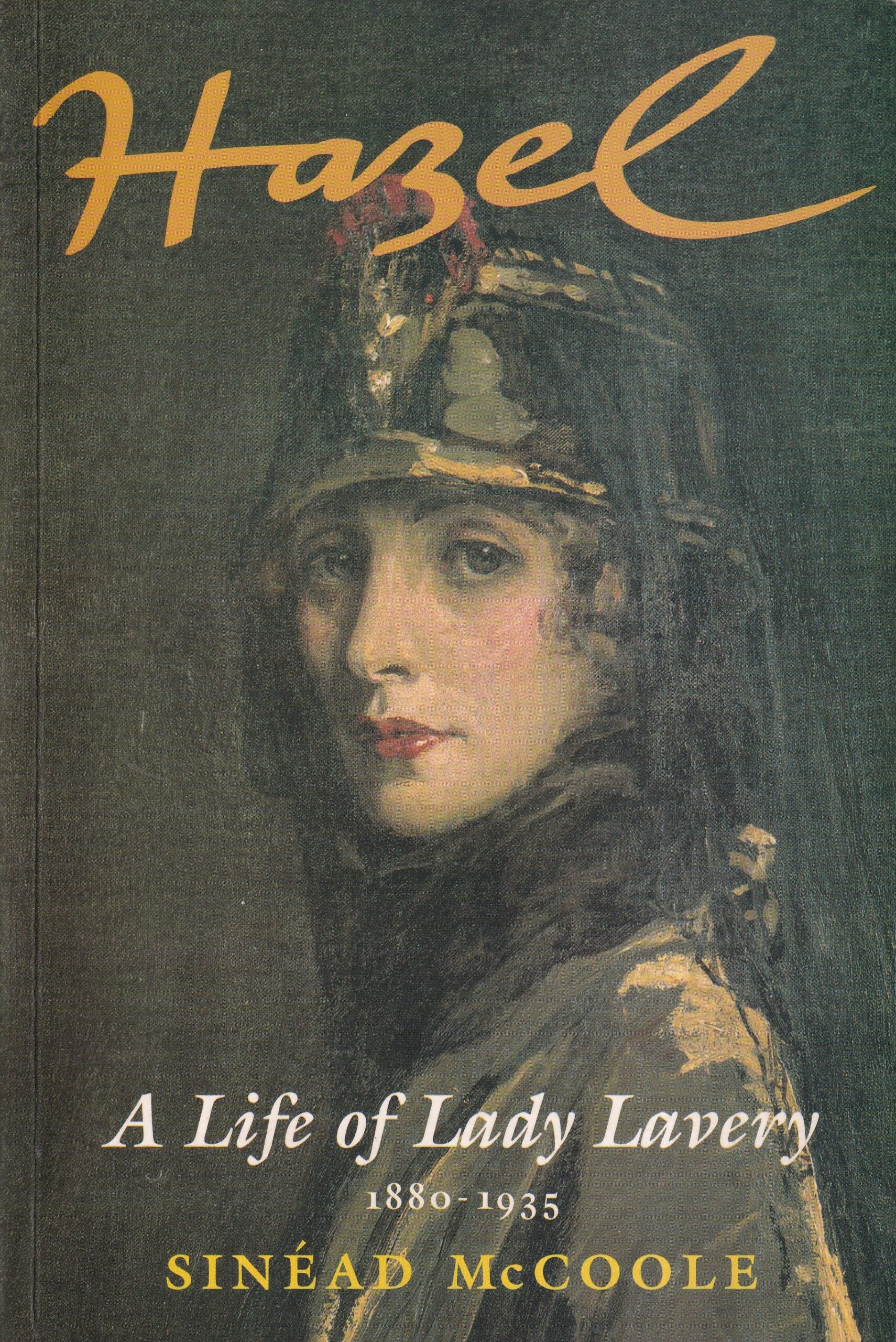
Hazel: A Life of Lady Lavery
Lilliput Press, 1996
About the Book
Hazel, A Life of Lady Lavery was first published by the Lilliput Press, Dublin, 1996. This book tells the story of Chicago beauty Hazel Martyn an artist, who met a Belfast born artist, John Lavery, 25 years her senior. His was a rags to riches story and by time he met Hazel he was celebrated in the art world, a member of the Glasgow Boys. Theirs was a star-crossed love affair, Hazel forced to marry her American suitor, who died within a year of marriage, another broken engagement, and the death of her mother (all documented in their letters used to tell this story) before they married in 1909.
Together they became well known celebrities in London, moving in the political and literary world. In time Hazel became interested in Irish politics, which would lead the couple becoming immersed in Irish politics in the period of the Irish Revolutionary years, 1916-1923. Thereafter they remained connected with the key figures who were now leaders in the Irish Free State. Her image became the 'Irish Colleen' on the Irish bank notes both as the main image, and later as a watermark 1928-1996.
This story was not known to even their closest friends, this book detailed why it was concealed and hidden. This book was pieces together from a scrapbooks, letters and other sources in the extensive Lady Lavery archives, in a private collection, to which Sinead was given access during the 1990s.
The book contains a catalogue at back entitled: Hazel, Lady Lavery, Society and Politics. Hugh Lane Municipal Gallery of Modern Art 18 September-3 November 1996. Copies of the cloth edition have the author's name omitted and this may be of interest to collectors.